Tyre tread depth: what does it mean?
One reading on the outside shows only part of the picture. Check the tyre in several places.
In one sentence
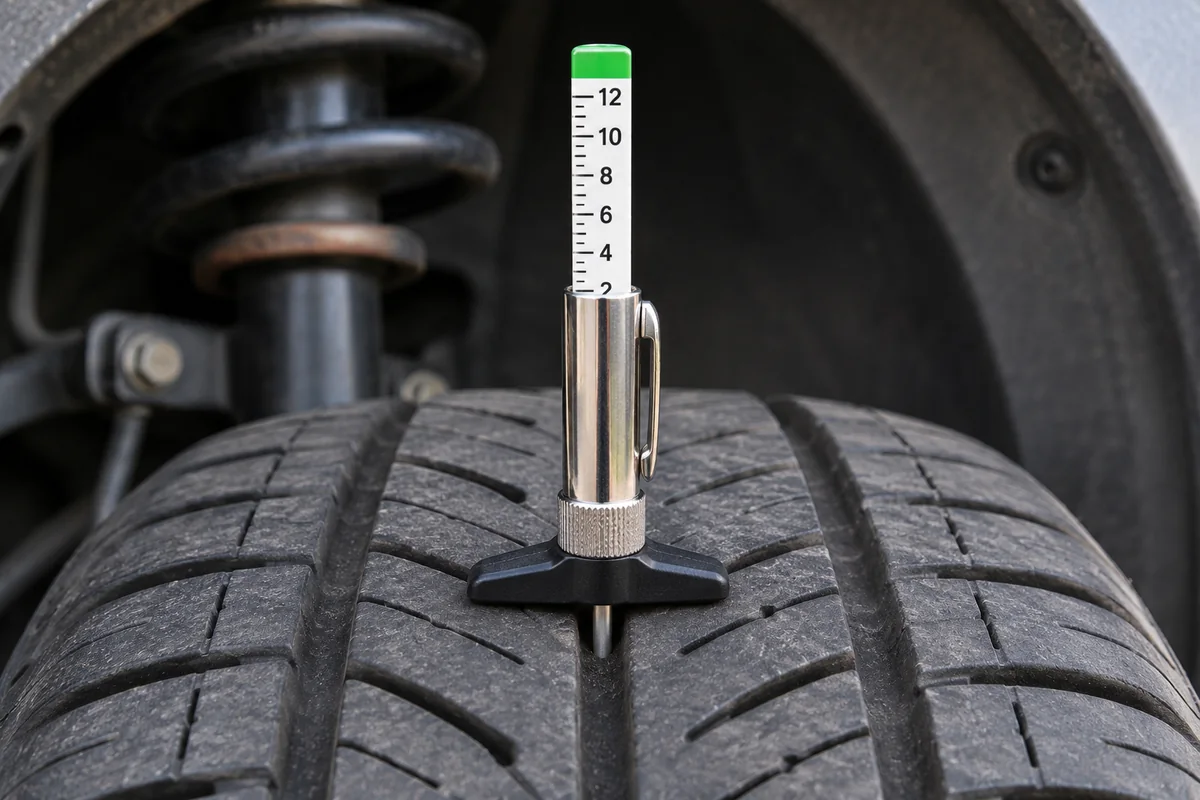
Tread depth is the depth of the grooves in a tyre’s tread. The grooves help disperse water. Depth is measured in millimetres.
How do you measure tyre tread?
Use a tread-depth gauge in the main grooves. Measure at several points around the tyre and inspect both shoulders. This helps identify uneven wear that a single outer reading can miss.
The Dutch RDW inspection handbook requires at least 1.6 mm in the main grooves around a passenger car tyre, excluding wear indicators. Other countries may have different requirements for winter driving. Check before departure.
Check for damage or bulges as well. A gauge cannot show these. If one side wears noticeably faster, a tyre specialist can also check pressure, alignment and suspension.
The outside looks better
You measure 4 mm where the tyre is visible but notice more wear on the inside. Have the whole tyre assessed before relying on one reading. Ask what could cause the same wear on a replacement.
Measure at several points and have uneven wear assessed.
Measuring the main grooves around the tyre
Measure in the main grooves and inspect around the tyre. Wear can be greater on the inside than on the part visible from the pavement. The reading also says nothing about a cut, bulge or other damage. Ask a tyre specialist to inspect any inaccessible or noticeably worn area.
Record the lowest reliable measurement for each tyre and where you took it. Keep the gauge flat against the tread and use the same method for a repeat measurement.
Repeat the measurement if the gauge base is sitting at an angle on the rubber. Try several points in the main grooves and record the lowest reliable reading. If you cannot safely reach the inside, ask a tyre specialist to include it in the inspection.
Recognising uneven wear
You measure a deep groove in the middle of a front tyre, but the inner side looks more worn. Do not use the single reading as a result for the whole tyre. Have the full tread and the reason for the difference examined.
Compare left and right, but also compare positions on each tyre. A local difference may tell you more than an average. Uneven wear can justify investigating pressure, alignment or suspension.
Check whether you are measuring the same wheel set as last time. Track summer and winter sets separately when changing seasonally. Otherwise, fitting a set with deeper tread may appear to improve the same tyres measured earlier.
Check the legal requirements for the vehicle and the country in which you drive. Have the tyre inspected if uncertain. Adequate tread alone is not a complete tyre check.
Tracking tread by wheel and wheel set
Keep the date, mileage, wheel position and any abnormal wear with each reading. When replacing tyres, ask whether the cause of the wear pattern needs attention.
If a replacement tyre again wears mainly on one side, compare the photo or reading with that of the old tyre on the same wheel position. Tell the workshop about the pattern and ask what check could help explain why wear keeps appearing there.
For a seasonal set, keep its readings separate from the wheels currently on the car. Record which set you measured.
Frequently asked questions
Where should I measure?
Measure in the main grooves at several points around the tyre. Check for uneven wear too.
What is the Dutch APK limit for passenger cars?
RDW requires at least 1.6 mm in the main grooves around the whole tread, excluding the wear indicators.

Keep track in Revler
Record the check date and which tyre or axle needs attention.
See it in the appSources and further reading
General information. Your vehicle handbook takes precedence for maintenance instructions.