Tyre pressure: what does it mean?
Your vehicle provides the correct pressure. Check tyre size, load and when you measure.
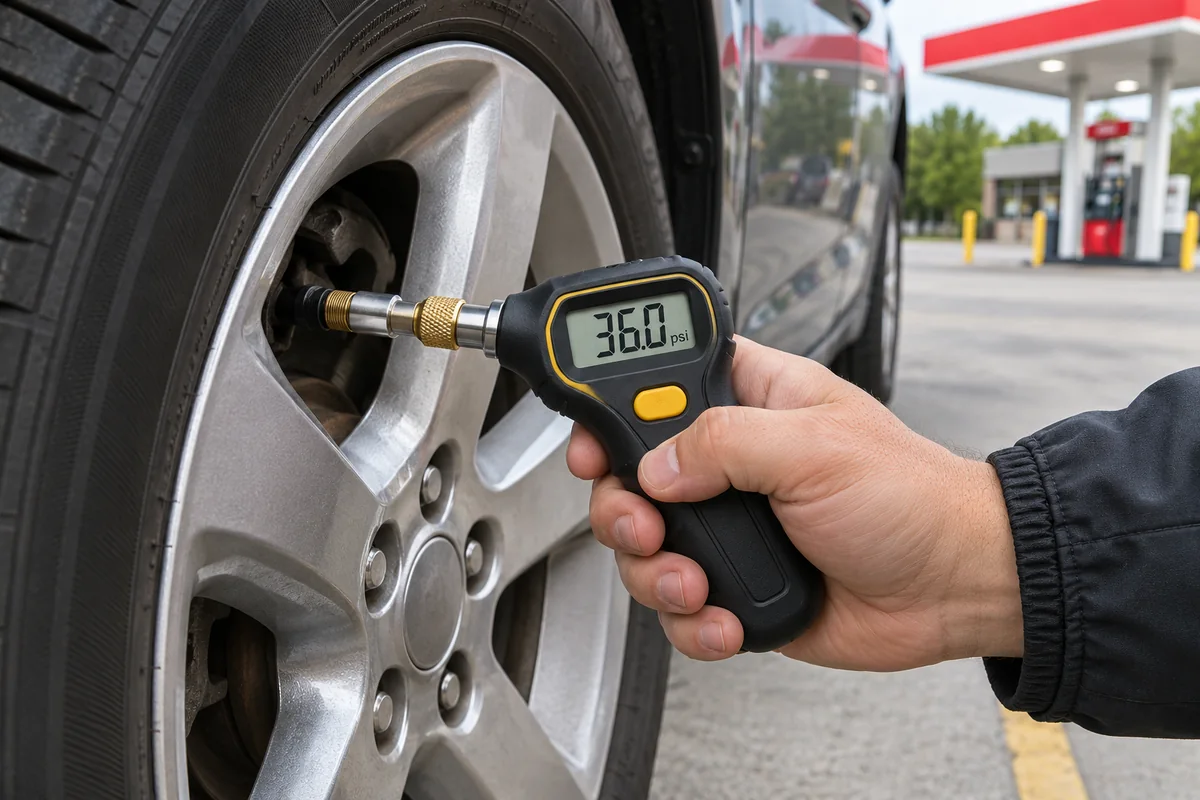
In one sentence
Tyre pressure is the air pressure inside the tyre, often expressed in bar. The vehicle manufacturer specifies the pressure for your tyre size, axle and load.
How do you find and measure the right pressure?
Check the handbook or the sticker by the door or fuel flap. Use the row for your tyre size and load. Front and rear values can differ. Do not use the sidewall maximum as the vehicle’s target.
Measure with cold tyres before driving or as your manufacturer directs. Tyres heat up when driving and the reading can rise. Do not compare a warm reading directly with the cold target.
If one tyre repeatedly loses pressure faster than the others, have it checked for leaks. After adjusting pressures, follow the handbook for any monitoring system reset.
A fully loaded holiday car
The sticker shows normal and full-load values. Before leaving with passengers and luggage, use the full-load row. On return, check which pressure applies to your usual driving.
Use your vehicle manufacturer’s values and measure in comparable conditions.
Choosing pressure for tyre size and load
Look for the recommended pressure in the handbook or on a vehicle label, often near a door or the fuel filler. Find the row for your tyre size and load. Front and rear values can differ. The number on the tyre sidewall does not replace this information.
Measure under the conditions specified by the manufacturer, usually with cold tyres. Record each wheel before and after adjustment. Use the same gauge when comparing repeat measurements.
Check the table before pressing the plus button at the pump. Write down the row for your tyre size and keep the front and rear values separate. If you have fitted a set in a different size, the row you used last winter may no longer apply.
Checking an unusual reading
Before a holiday trip you fill the boot with luggage. The label gives a separate set of values for a loaded car. Select the row that matches the journey and look up the everyday setting again after returning.
Everyday settings may differ from those for a heavily loaded car. Check whether your model requires the monitoring system to be initialised after adjustment.
If a reading looks unusual, refit the gauge firmly to the valve and measure again. A loud escape of air can indicate a poor seal between the gauge and valve. If a difference persists, check whether a second gauge reproduces it.
Have a tyre checked if it repeatedly loses pressure. Ask whether the valve, rim seal and tread have been examined. With visible damage, have the tyre assessed before deciding whether it is safe to continue.
Tracking pressure loss by wheel
Record the affected wheel, the time between measurements and whether you adjusted the pressure in between.
If the rear left tyre loses pressure again after a few days, record both cold readings. Tell the tyre shop when the tyre was fitted. That gives the specialist a starting point for checking the valve, tread and seal against the rim.
If you check at a service station after a drive, write down that the tyres were warm. Compare a later cold reading with the vehicle recommendation under the conditions it specifies.
Frequently asked questions
Should left and right have the same pressure?
Follow the values for the axle and vehicle load. Front and rear recommendations can differ.
Why does the warning keep returning?
A tyre may be losing pressure or the monitoring system may be reporting a fault. Check the pressures and read the exact message.

Keep track in Revler
Record a tyre check or recurring pressure loss in your maintenance log.
See it in the appSources and further reading
General information. Your vehicle handbook takes precedence for maintenance instructions.