Winter tyres: what does it mean?
The sidewall shows your tyre’s marking. Your journeys help determine when you need the set.
In one sentence
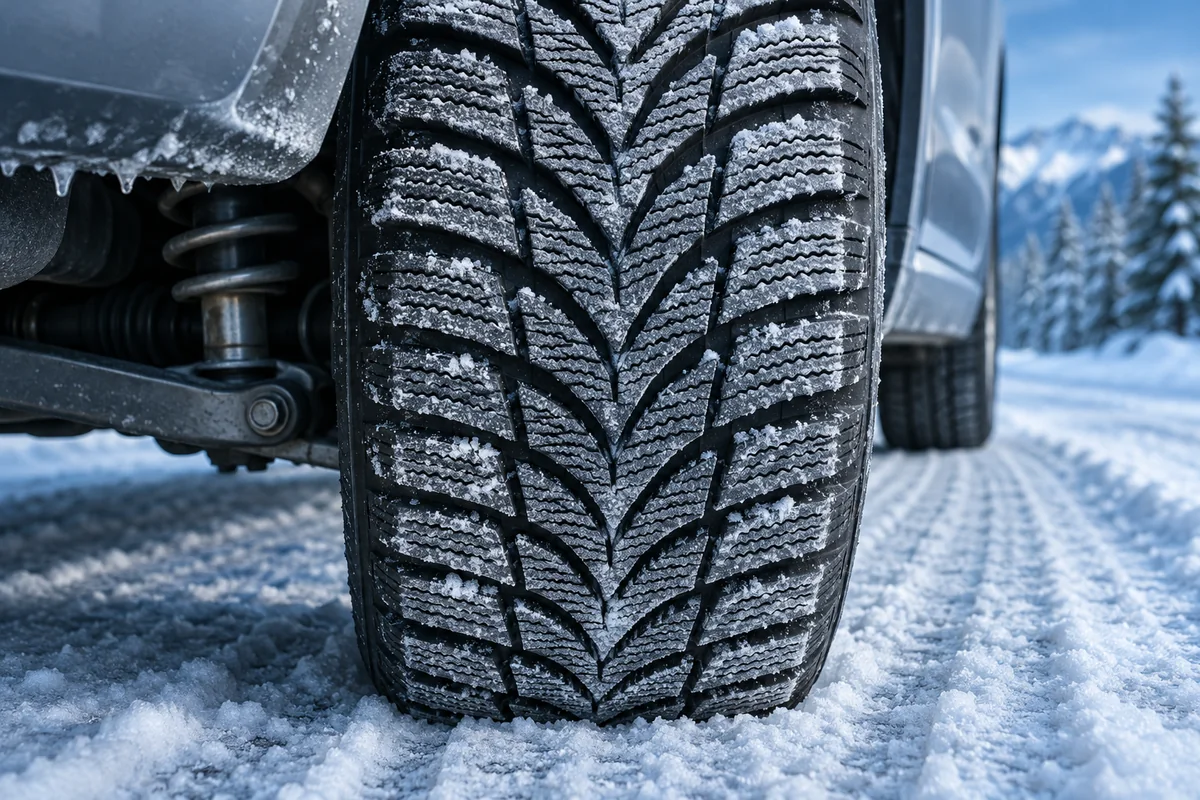
Winter tyres are designed for low temperatures and winter conditions. Their rubber and tread are designed for situations including cold weather and snow.
How can you identify winter tyres and when are they useful?
Look for the mountain and snowflake symbol on the sidewall, often called 3PMSF. All-season tyres can carry the symbol too, so also check the tyre type and model.
Around 7 °C is a planning guide for the seasonal change. Also consider the road surface, when you drive and what conditions are expected. One cold morning may call for a different decision from a week of frost.
Foreign journeys may be subject to winter equipment requirements. Check current rules for your destination and transit countries, including markings, tread and any snow chains.
From city driving to a ski trip
Cold mornings may be the main issue on your commute. A ski trip can add mountain roads and snow. Check your fitted tyres well before departure and arrange replacements in time.
Check what type of tyre you have and the condition of the set before changing.
Checking markings, tyre size and tread
Winter tyres are designed for cold conditions. The choice depends on where and when you drive, approved sizes for the car and rules along the route. A mountain and snowflake marking indicates tested snow performance. Check which markings, dates and conditions matter in each country.
Check size, markings, tread and visible damage before fitting a set. Consider how long the tyres were stored and have their condition assessed if in doubt.
Check the markings before having the set fitted. Is the snowflake symbol on all four tyres, and are their sizes approved for the car? Check those questions separately from the date you plan to switch. A suitable size does not establish that a tyre has the winter marking you need.
Choosing winter tyres for your route
A trip to a ski area takes you through several countries. Check the requirements for the destination and transit countries and ask the tyre shop whether your set complies. A tyre commonly used at home may not answer the rules along your route.
Compare winter and all-season tyres for your own journeys. Daily early trips outside town are different from driving a car that can stay parked during snow.
With a used wheel set, confirm that the wheels are approved for your vehicle. Ask the workshop to check pressure sensors and the specified tightening torque too. Those are separate questions from whether the tyres are suited to winter conditions.
Before driving abroad, check current rules for the route with the relevant authorities. Look for separate rules on equipment such as snow chains. Follow the vehicle specifications for fitting and inflation.
Keeping track of wheel sets and changes
When switching, record the date, wheel set and measured tread depth. Keep the details to plan the next change.
When storing the set, note each tyre’s position and which tread reading belongs to it. If the tyre shop moves the wheels to different corners at the next change, ask where they were fitted. You can then match a change in wear to the correct tyre.
When storing wheels, mark which vehicle and season they belong to. That makes it easier to match the set to the right records at the next change.
Frequently asked questions
Is M+S the same as the snowflake symbol?
The markings have different meanings. Check which one is required on your route.
When should I change tyres?
Consider the conditions in which you drive and any rules along the route. Treat temperature rules of thumb as practical guidance.

Keep track in Revler
Record the fitted set and the mileage when it was changed.
See it in the appSources and further reading
General information. Your vehicle handbook takes precedence for maintenance instructions.