Tyre date code: what does it mean?
Four digits on the sidewall tell you when a tyre was made. Here is how to find and read them.
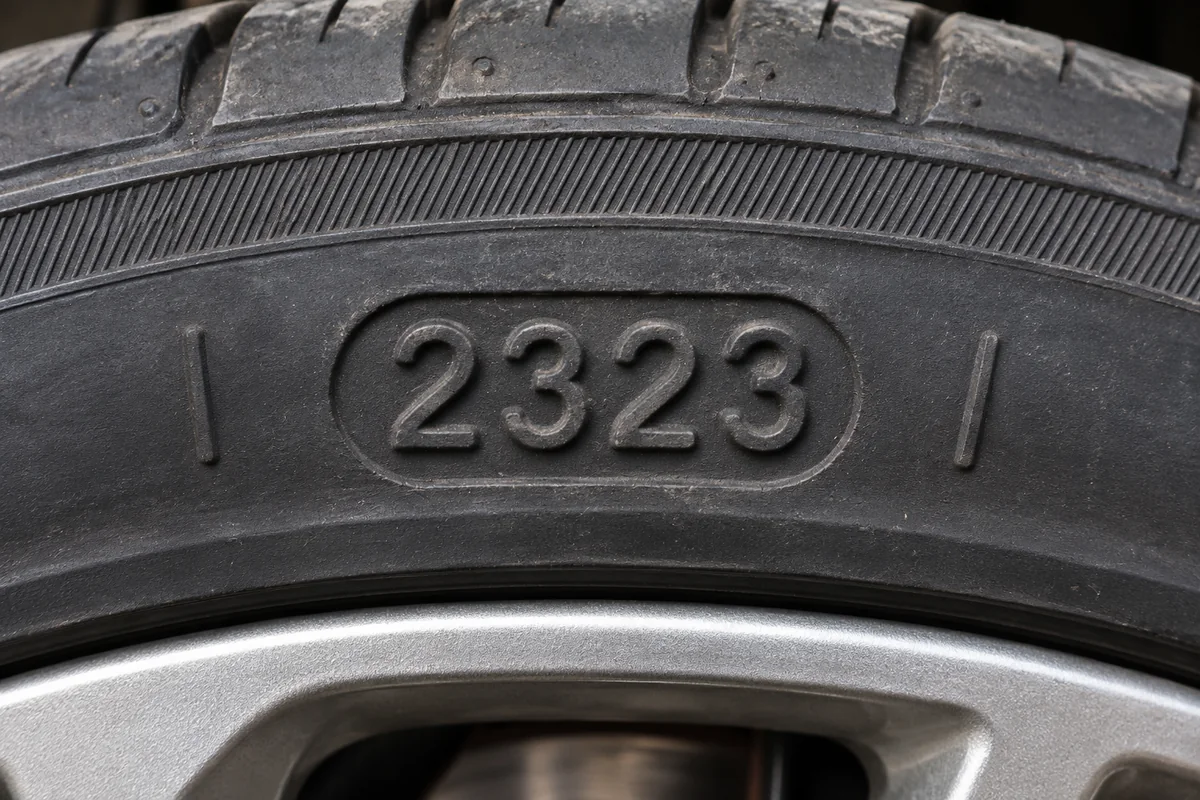
In one sentence
The date code on a tyre sidewall gives its production week and year. The four digits are usually at the end of the identification code by the DOT marking.
How do you read the year on a tyre?
Look for four digits at the end of the code. The first two give the week and the last two the year. If the code looks incomplete, the full marking may be on the other side of the tyre.
Read each tyre separately. Tyres on the same car can have different production or fitting dates. For a second set, record which code belongs to which tyre.
Use the code alongside a check for tread, damage and wear. It tells you when the tyre was made, not its current condition. Ask a specialist about cracks, bulges or age concerns.
What does 2322 mean?
2322 means week 23 of 2022. If the wheel was fitted in 2024, the tyre’s production date remains the same. Record both dates if useful so you can distinguish production from fitting.
Read each tyre’s date code and assess the condition of the complete set.
Where to find the date marking
The production date helps you understand a tyre’s history. It does not reveal when the tyre was fitted, how it was stored or what pressures it ran at. A used tyre may need more attention than the age alone suggests.
Find the complete date portion on the sidewall. It may be on one side only. Take a photograph if practical or ask a tyre specialist to read it if the marking is hard to reach.
The production week may be on the inner sidewall. Avoid going under the car to look for it. Ask the tyre specialist to read the code when the wheels are being changed and check the condition of the areas that are hard to see yourself.
Comparing manufacture and fitting history
Two tyres have the same tread pattern, but one was made later. That only tells you that the tyres came from different production weeks. Look for invoices to establish when each was fitted.
Compare the codes wheel by wheel. Different production weeks can be explained by an earlier replacement after damage. Use the date alongside information about tread, damage and use.
When comparing used tyres, check that the sizes, load ratings and speed ratings suit your car. A recent manufacturing date tells you nothing about those properties. If the date code is hard to see, ask the seller to identify it before you buy.
If age or condition is uncertain, consult the tyre manufacturer’s guidance and have the tyre inspected. With a used set, also confirm the size and other markings required by the car.
Recording manufacture and fitting dates
Keep a note of the production date with the fitting invoice so manufacture and first use stay distinguishable.
A photo showing only four digits can be difficult to match to a tyre later. Add the wheel position and tyre size. If the wheels move to different corners of the car, the markings and fitting invoice can help you identify each tyre again.
Check each tyre separately before purchase, including any spare supplied with the set. The date on one wheel cannot establish when the other tyres were made.
Frequently asked questions
What does 2423 mean?
As a four-digit date code it means week 24 of 2023.
Is the DOT code an expiry date?
No. The date portion shows when the tyre was made. Age, use and physical condition all matter when assessing it.

Keep track in Revler
Keep the tyre change date and your observations in your maintenance record.
See it in the appSources and further reading
General information. Your vehicle handbook takes precedence for maintenance instructions.