Brake pads: what does it mean?
Brake pad life varies by vehicle and use. A garage measurement helps determine when replacement is due.
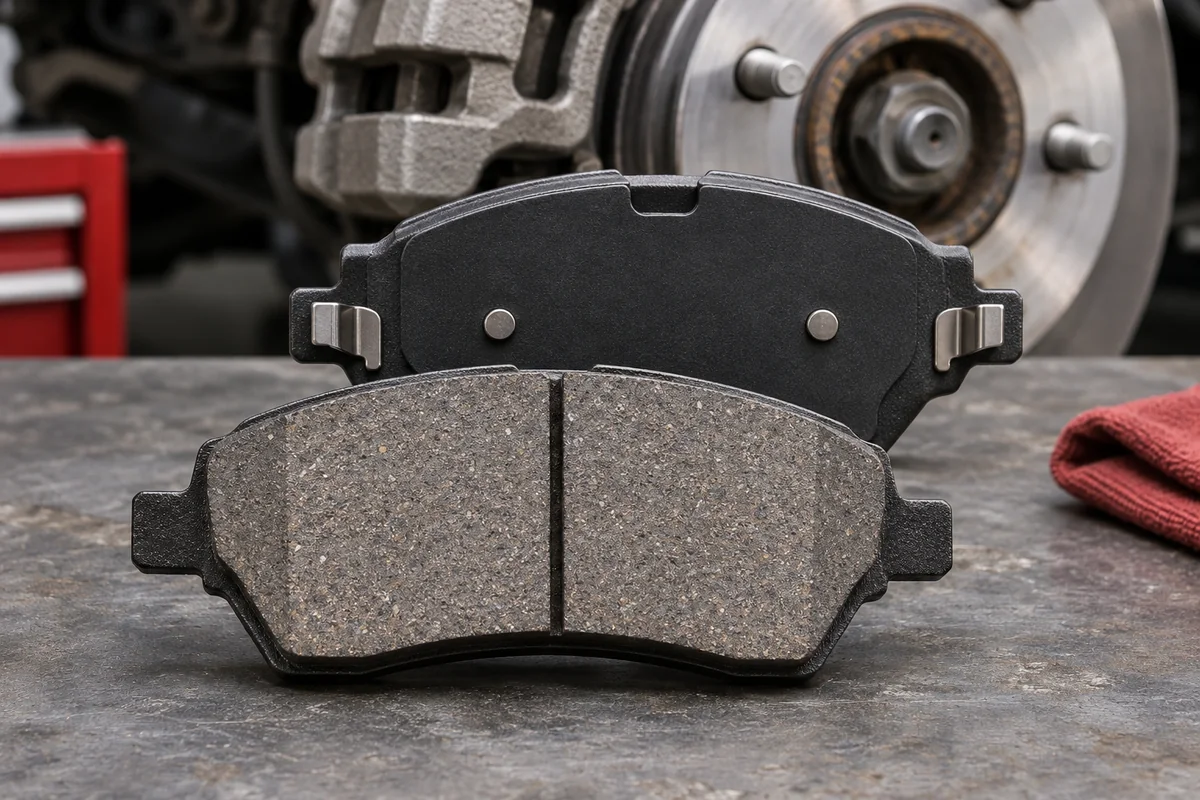
In one sentence
Brake pads are components of a disc brake. They press against the disc to slow the wheel, wearing down their friction material in the process.
When are brake pads due for replacement?
There is no universal mileage. Use, load and brake condition affect wear. Ask the garage to assess pad thickness against the limit for your braking system.
Noise or a wear warning is a reason to have the brakes checked. Ask about pads that are hard to see from outside. Pads on the same axle can wear unevenly.
Ask which axle the quote covers and whether it includes pads only or discs as well. Ask the garage what measurement or finding supports its advice.
New pads, existing discs
The front pads are almost worn out. The garage measures and inspects the discs too. You can then decide on a pads-only or pads-and-discs quote based on what was found.
Have brake problems assessed promptly and ask for a quote by axle.
Assessing inner and outer brake pads
Disc brakes use pads that press against the disc. Their friction material wears during use. Inner and outer pads can wear at different rates. A quick look through the wheel often shows only part of what a workshop checks. A warning can also depend on whether the vehicle has a wear sensor and where it is fitted.
Describe only what you have observed safely. For example, note whether a noise persists, appears to come from one side or occurs with a warning.
When a wear warning appears, ask which pad the sensor monitors. An outer pad visible through the wheel can still look sound while an inner pad has worn further. Ask which pads were measured and whether the guide mechanism was checked.
Uneven wear and the brake caliper
A service inspection finds one inner pad noticeably thinner than its outer pad. Ask whether the caliper and guides were inspected. That clarifies what belongs in the quote and whether an underlying cause also needs attention.
Ask which pads were measured and how the thickness compares with the specification for your brakes. Have the caliper checked if wear is uneven.
If the workshop checks both sides of an axle, ask whether measurements were similar left and right. For a substantial difference, find out which side was affected and whether the movement of its caliper was examined. This is useful when asking what might prevent the pattern from recurring.
If braking performance changes or a serious brake warning appears, follow the vehicle instructions and get help. Do not drive to try to reproduce a suspected brake fault.
Recording brake pads and parts by axle
Record the axle and whether discs, sensors or other parts were replaced at the same time.
Record whether the pads were changed on the front or rear axle. If a wear sensor or brake disc appears on the invoice, keep that item with the same job. At a later check you can see which components still belong to the previous set.
If a technician recommends replacing pads on an axle, ask which matching parts are included. Identify the exact brake setup before comparing a quote with a parts listing online.
Frequently asked questions
Do squeaking brakes always mean worn pads?
Noise has several possible causes. Have persistent or changing noise assessed.
Can pads and discs be replaced separately?
It depends on the condition and specifications of both parts. Have them assessed together.

Keep track in Revler
Record which brake components were replaced on each axle.
See it in the appSources and further reading
General information. Your vehicle handbook takes precedence for maintenance instructions.