Brake discs: what does it mean?
If the garage recommends new discs, ask about measured thickness and what it found on the braking surface.
In one sentence
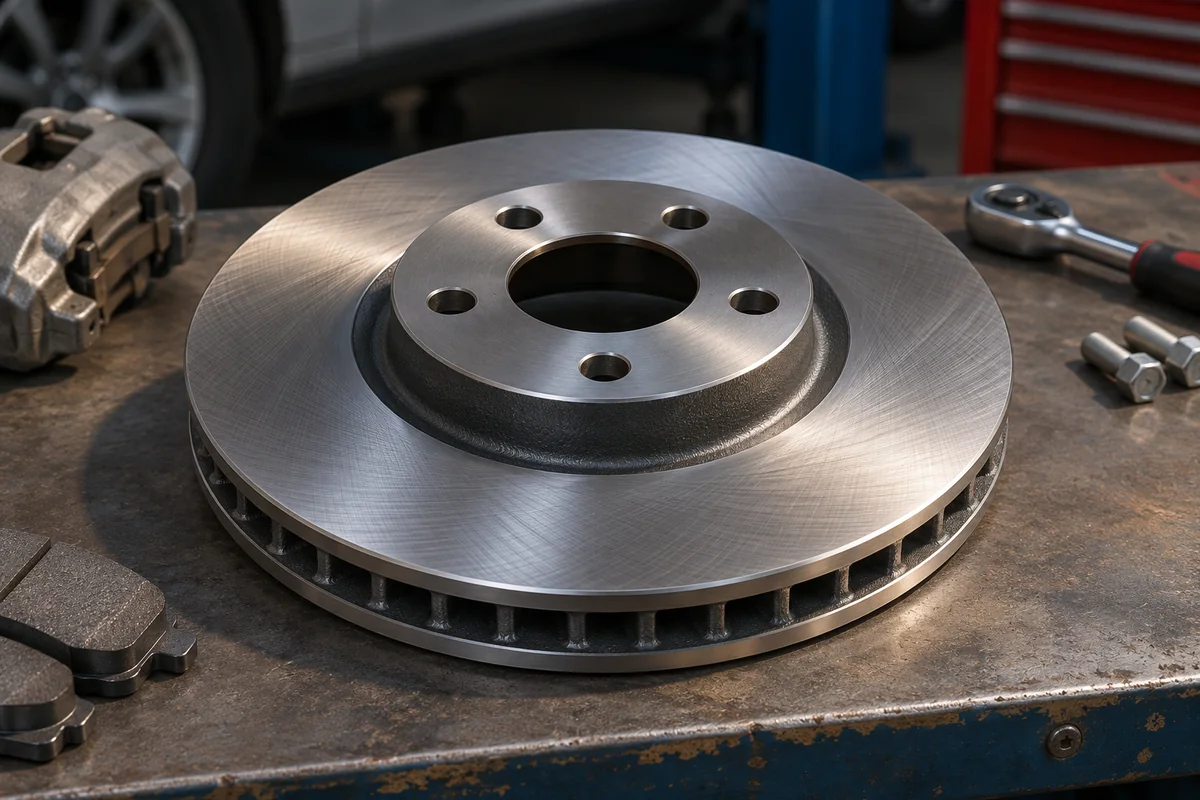
A brake disc rotates with the wheel. When you brake, the pads press against it. Friction slows the wheel, heats the disc and gradually wears it.
When should the garage assess the discs?
The garage can measure thickness and inspect the braking surface. The minimum thickness depends on the disc. A lip around the edge alone does not tell you how much usable thickness remains.
Vibration under braking or persistent noise warrants a check. Such symptoms can have different causes. Describe when you notice it and let the garage diagnose the problem.
Ask which axle the quote covers, whether pads are included and what labour and parts cost. If discs are due, discuss the complete job for that axle.
Surface rust after parking
After a wet weekend you notice a thin layer of rust. A garage can assess whether it is surface rust or whether the braking surface needs attention. Have recurring noise or vibration checked.
Ask about the measurement and condition before scheduling replacement.
Assessing disc thickness and surface
A brake disc works together with the pads. A workshop examines its surfaces and compares its thickness with the minimum for that specific part. The edge alone tells you too little. The inside can also look different from the outside. Measurements and the position of an issue help explain a recommendation.
Note when you first noticed a vibration or noise without deliberately provoking it. Tell the workshop whether it also occurred without braking.
If a thickness reading is unusual, ask where on the disc the workshop measured. The raised lip at the edge does not tell you the thickness of the braking surface. Ask the technician to compare the reading with the limit for the exact disc fitted.
Investigating vibration and comparing quotes
You notice vibration while slowing down. The workshop can investigate its source and measure the brake discs. Ask for the finding before ordering a part. A shaking steering wheel has several possible causes.
Ask whether a disc quote includes matching pads, labour and any sensors. Ask whether the recommendation is based on wear, damage or another finding.
For a second quote, ask which disc variant is included. A car model can have been sold with several brake sizes. Vehicle details and a check of the equipment fitted can help the workshop identify the correct disc. Include both the front or rear axle and any difference in the quoted scope.
If braking changes noticeably or a serious warning appears, follow the vehicle safety instructions and get help. If the only symptom is vibration, have other possible causes considered as part of diagnosis.
Keeping disc measurements by axle
Record the axle and parts involved. Keep any measurements and distinguish an inspection from a replacement on the invoice.
If the workshop says replacement can wait, record when it wants to check the discs again. Keep the measurement with that appointment. At the later inspection, the technician can compare the new reading with the previous value for the same axle.
Keep old measurements with the quotation if they are available. If you return after more driving, ask whether the workshop needs a fresh measurement before ordering parts.
Ask for a measurement for each side of the axle if the quote covers both discs. The two readings can differ.
Frequently asked questions
Is a light film of rust immediately a problem?
Light surface rust can appear after parking. Have persistent corrosion or unusual braking behaviour assessed.
How do I find the minimum thickness?
It depends on the exact disc. The workshop can look up the value for your part.

Keep track in Revler
Record which parts were replaced on each axle and when.
See it in the appSources and further reading
General information. Your vehicle handbook takes precedence for maintenance instructions.