Brake fluid: what does it mean?
Brake fluid can be due even on a low-mileage car. Check your vehicle’s requirements and the last invoice.
In one sentence
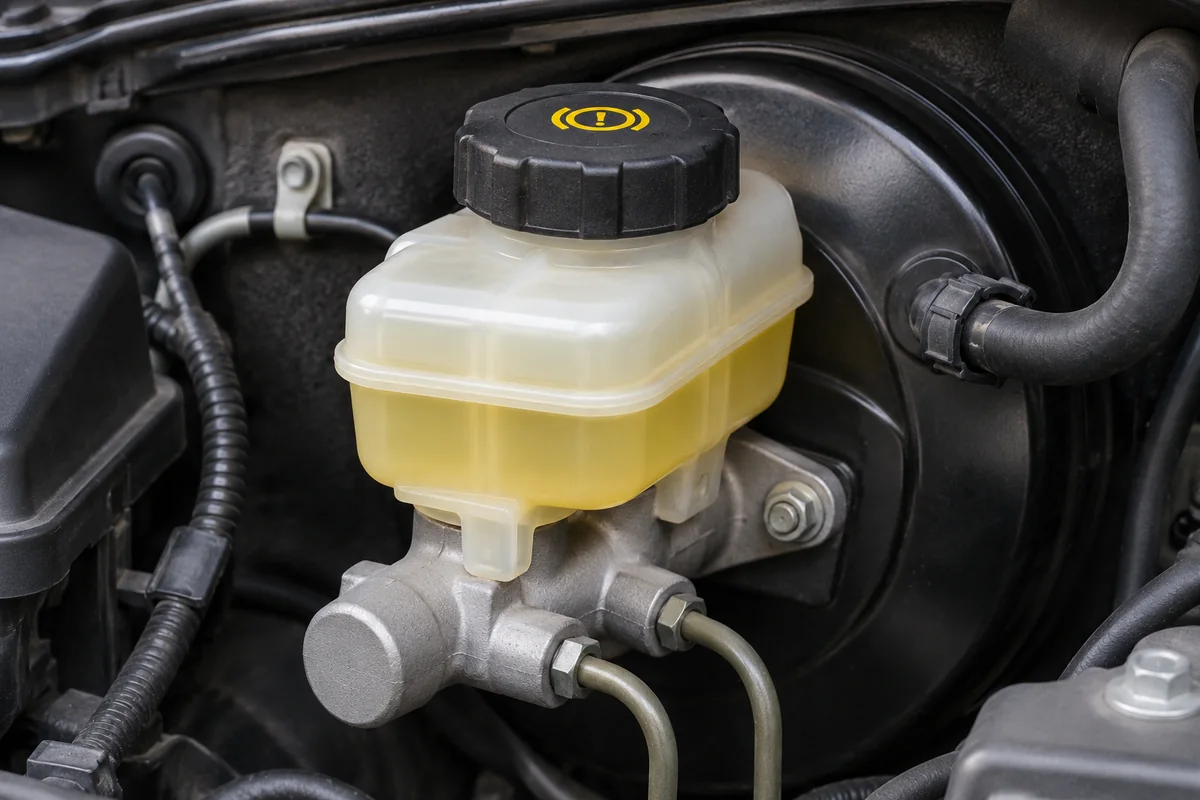
Brake fluid transfers pressure from the pedal to the brakes. It is part of the hydraulic braking system and has its own service requirements.
Why replace brake fluid on schedule?
Brake fluid can absorb moisture over time, lowering its boiling point. Manufacturers may specify a time interval even for cars driven infrequently.
Look up the interval and specification for your vehicle. Ask whether a service quote includes brake fluid replacement. Checking the level is a different job from changing the fluid.
If you see a brake warning or the pedal feels abnormal, stop as soon as it is safe, follow the handbook and get assistance. The cause, such as a leak, must be investigated.
Low mileage since the last service
Your car has travelled only 3,000 km since its last service. If the brake fluid time interval has elapsed, a change can still be due. Check the previous invoice to see whether it was replaced.
Record the change date and follow your vehicle’s specification and interval.
Checking fluid specification and level
Brake fluid transfers pressure from the pedal to the brakes. Most common fluids used for this purpose can absorb moisture in service. That affects properties including boiling point. The manufacturer schedule and a professional assessment help establish whether replacement is due.
Check which fluid specification your car requires. Read the handbook for the conditions under which to look at the reservoir without opening the brake system yourself.
For a low reading, start with the warning message and handbook. When the workshop diagnoses it, ask about pad condition and possible leaks as well. Those findings matter more for the next step than the position of the line on the reservoir alone.
Topping up, flushing and bleeding
During a service the workshop sees that fluid replacement is due under the schedule. Ask which specification it will use and how it will be itemised. If the invoice only says ‘topped up’, check whether a full change was actually performed.
Ask whether a quote includes flushing and bleeding in accordance with your car’s procedure. Correcting the level and replacing fluid as a scheduled job are separate operations.
When buying a used car, look for the last fluid change on an invoice. A tick beside a general inspection does not tell you which fluid was changed. Ask the workshop which service limit applies if the date cannot be established.
If you see a brake warning, notice a sudden drop in level or feel a change at the pedal, follow the safety instructions and get help. Have the cause assessed before driving on. A lower level can have several causes.
Recording the change and next check
Record the exact fluid, date, reason and any repairs to the brake system. Keep the next inspection as a separate reminder.
If the invoice lists only a small quantity of fluid, ask whether it was a top-up or part of a complete change. Record the date of the actual replacement. Use that date when looking up the next interval in the maintenance schedule.
Check which service procedure applies if the vehicle uses an electronically controlled braking system. A workshop can explain whether it needs diagnostic equipment during the work.
Frequently asked questions
Can I use any DOT fluid?
Use the exact specification in the handbook. The designations are not freely interchangeable quality levels.
Is a top-up the same as a change?
No. A top-up corrects the level. A change renews the fluid using the prescribed service procedure.
Keep track in Revler
Record the fluid change date alongside other brake maintenance.
See it in the appSources and further reading
General information. Your vehicle handbook takes precedence for maintenance instructions.