Starter battery: what does it mean?
Does your car struggle to start after a few days parked? That pattern can help the garage diagnose the problem.
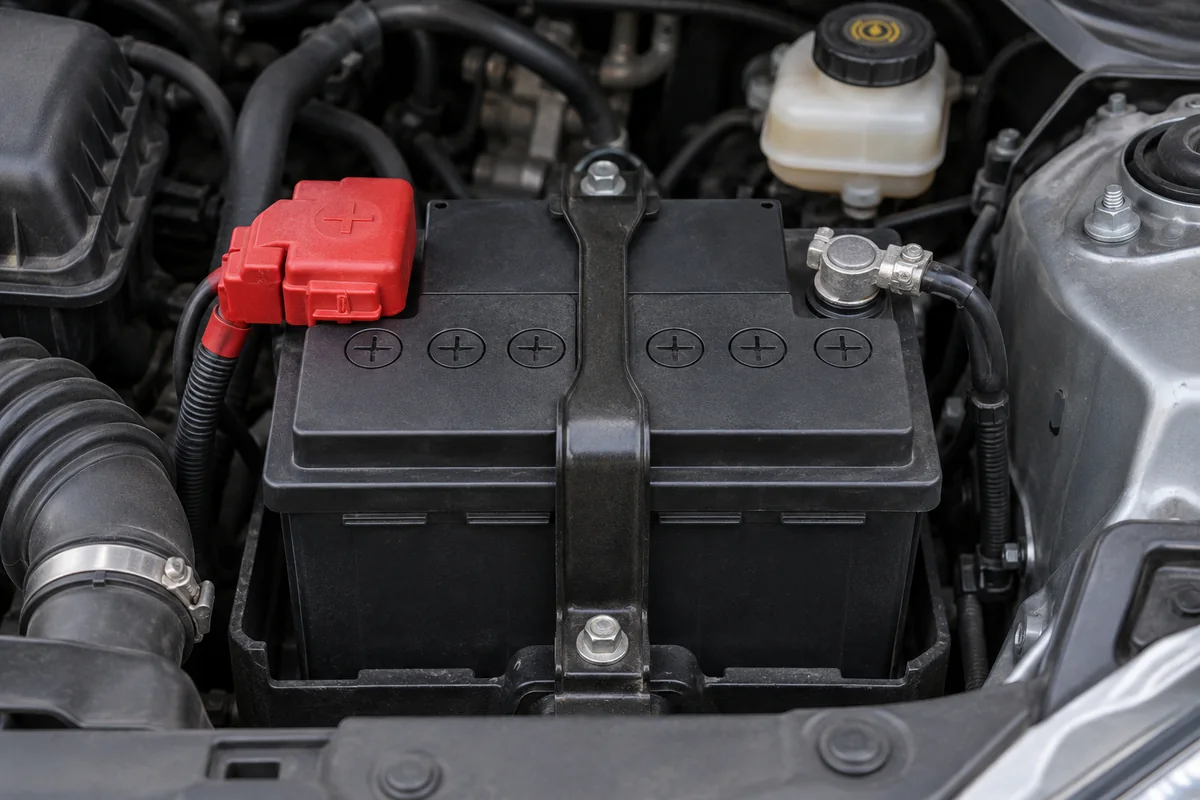
In one sentence
A starter battery provides the power to start a combustion engine and supplies electrical systems when needed.
How can you recognise a weak battery?
Slow cranking or recurring starting problems are reasons to test the battery. Charging problems, a drain while parked or a starter fault can cause similar symptoms. Diagnose the cause before replacing parts.
Frequent short trips or long periods parked can leave a battery undercharged. Note when the issue appears. If the car only struggles after a few days parked, that helps diagnosis.
Ask for the right size, capacity and technology for your model. Start-stop vehicles can have specific requirements. Ask whether the replacement needs to be registered with the vehicle.
Slow starting after a weekend
The car starts normally after a longer drive but struggles after two days parked. Ask the garage to check the battery and charging system and describe the pattern. One voltage reading does not explain why it discharges.
Have recurring starting problems diagnosed and bring the old battery specification.
Describing and testing a starting problem
A starter battery can struggle to deliver the required current, for example after a long period parked or as its condition declines. A starting problem can also involve a connection, the charging system or a device that continues to draw power. A workshop can test these possibilities separately.
Describe what happened when you tried to start. A click, slow cranking and no response offer different clues. Note how long the car had been parked and whether it only happened in cold weather.
Note whether the dashboard lights dimmed during the attempt or stayed on normally. Mention whether the starter turned the engine. Together these clues help the workshop distinguish a power supply problem from an engine that cranks but does not fire.
Investigating repeated discharge
The car starts with help but has the same issue after a few days parked. Report that pattern so the workshop can investigate battery deterioration, insufficient charging or discharge while parked.
A single voltage reading tells you less than an assessment of charge, battery condition and the charging system together. Ask what the test shows and whether the battery first needs charging for a reliable result.
When replacing the battery, ask where it is fitted and which battery data the car needs. Testing a battery and registering a replacement are separate tasks. Ask the workshop to list each if it performed both.
If using a jump start, follow the procedure and connection points for your model. When replacing the battery, ask which type is specified and whether the vehicle needs to register it. Have repeated discharge investigated.
Recording testing and battery replacement
Keep the date, battery technology and test result. Note whether charging and any current draw while parked were examined.
If the battery goes flat again after charging, record how long the car was parked and whether accessories were left connected. Ask for both the battery test result and the charging system findings. Keep both with the invoice if you have a replacement fitted.
Keep the battery test with the date and weather conditions if cold starts were the problem. This gives the workshop context if a later test is carried out after a warm drive.
Frequently asked questions
Does a starting problem always mean a failed battery?
No. Connections, the charging system and other parts can also contribute.
Is the 12V battery in an electric car the traction battery?
No. The 12V battery serves low-voltage systems. The traction battery supplies the drive system.

Keep track in Revler
Keep the date and specification when replacing your starter battery.
See it in the appSources and further reading
General information. Your vehicle handbook takes precedence for maintenance instructions.