Service history: what does it mean?
Buying a used car or checking the last service? Look at what the service book and invoices actually show.
In one sentence
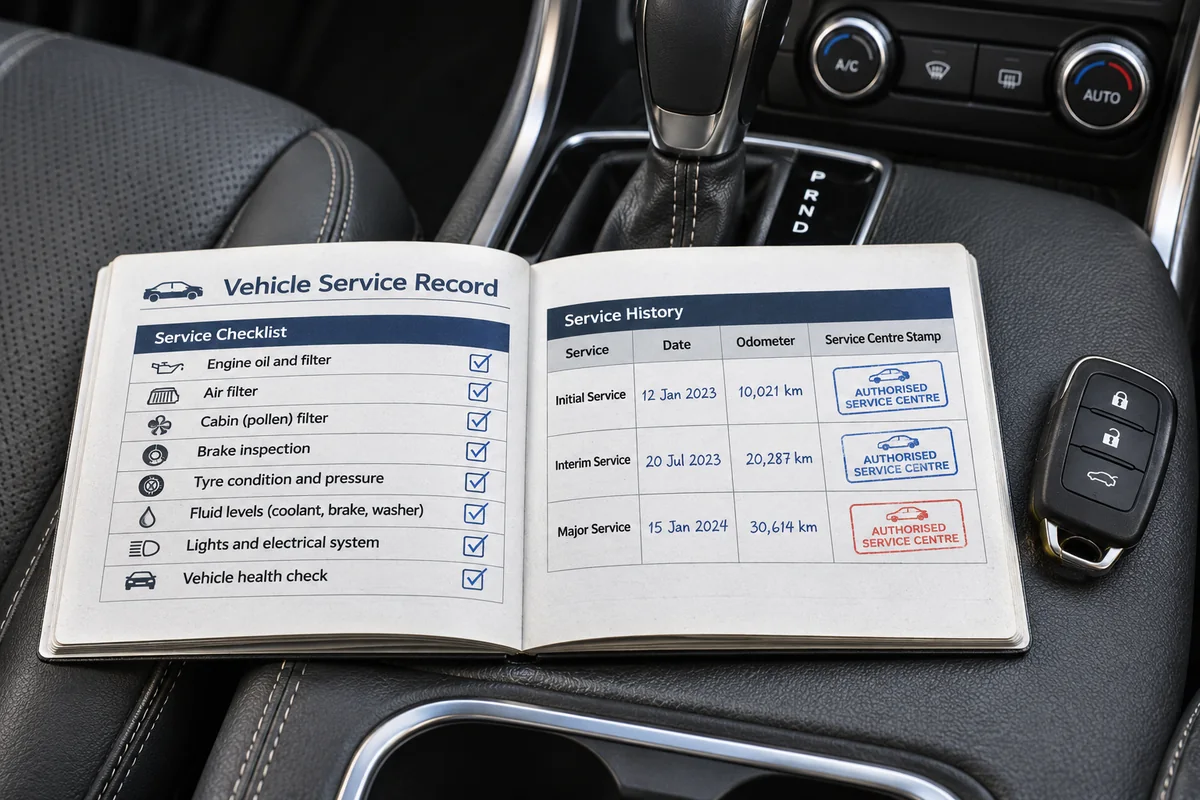
A service book is the paper or digital record of a car’s scheduled services. The wider service history also includes documents such as invoices and job sheets.
What does each document show?
A stamp usually shows that a service took place. An itemised invoice can show which parts were replaced, which oil was used and the mileage. Keep the documents together.
When buying used, ask for invoices or an export from the digital service system. Check that vehicle details, dates and mileages fit together. A mileage record alone does not prove what work was done.
If the book is missing, start with the documents you can recover. Ask the garage what records are available and note any gaps. Have important maintenance items checked when replacement cannot be documented.
A stamp without an invoice
The book has a stamp at 120,000 km but says nothing about the timing belt. Ask for the invoice before assuming the belt was replaced. Mark its replacement as unconfirmed until you have evidence.
Keep evidence for each maintenance item so you can determine its next due point.
Checking stamps against workshop invoices
A stamp or digital record shows that a service was recorded. For details of parts and fluids, you often need the workshop invoice. Compare the two. Check the date, mileage and vehicle details. Ask about unexplained gaps, especially if a scheduled job fell due in that period.
Ask about documentation for work outside routine servicing, such as timing components, tyres or repairs after a fault.
With two documents from the same month, mileage can help establish which came first. If a later invoice has a lower reading, ask whether the registration is correct and whether the figure was mistyped. Keep that question with the invoice concerned.
Finding missing service documentation
A seller points to a service stamp. The invoice lists oil and a filter but no timing belt. Treat it as evidence of the oil service and ask for a separate timing belt record. An absent invoice leaves an open question.
A stamped booklet with few invoices tells you something different from a folder of itemised job sheets. Identify any evidence missing for the next scheduled task.
Compare invoice mileage with other documents from the same period. If a number differs, ask what happened. A typing error and a missing job sheet are different problems that need different evidence to resolve.
When buying a vehicle, ask whether the seller can show an authorised copy of the digital record. Keep only the details you need for servicing, leaving previous owners’ personal information out of your records.
Separating confirmed and uncertain work
Record which tasks are supported by documents and which remain uncertain. Keep future appointments separate from work already completed.
Separate records about this vehicle from general information about the model. For example, keep the handbook schedule with your plans and the workshop invoice with the completed service. At sale, you can show which document supports each entry.
If maintenance was done at home, dated receipts and notes can establish which parts were bought and when the work was done. Record those details together.
If a digital record has no invoice attached, write down the workshop name and date. Those details can help you request a copy later.
Frequently asked questions
Is a digital service record sufficient?
It can show recorded services. Ask for invoices if you need to identify parts that were actually replaced.
Can an inspection report replace the service record?
The report covers the inspection. It does not provide a complete servicing history.

Keep track in Revler
Record dates, mileage and completed maintenance together.
See it in the appSources and further reading
General information. Your vehicle handbook takes precedence for maintenance instructions.