What is a timing belt?
The timing belt sits out of sight, but it controls when your engine valves open and close.
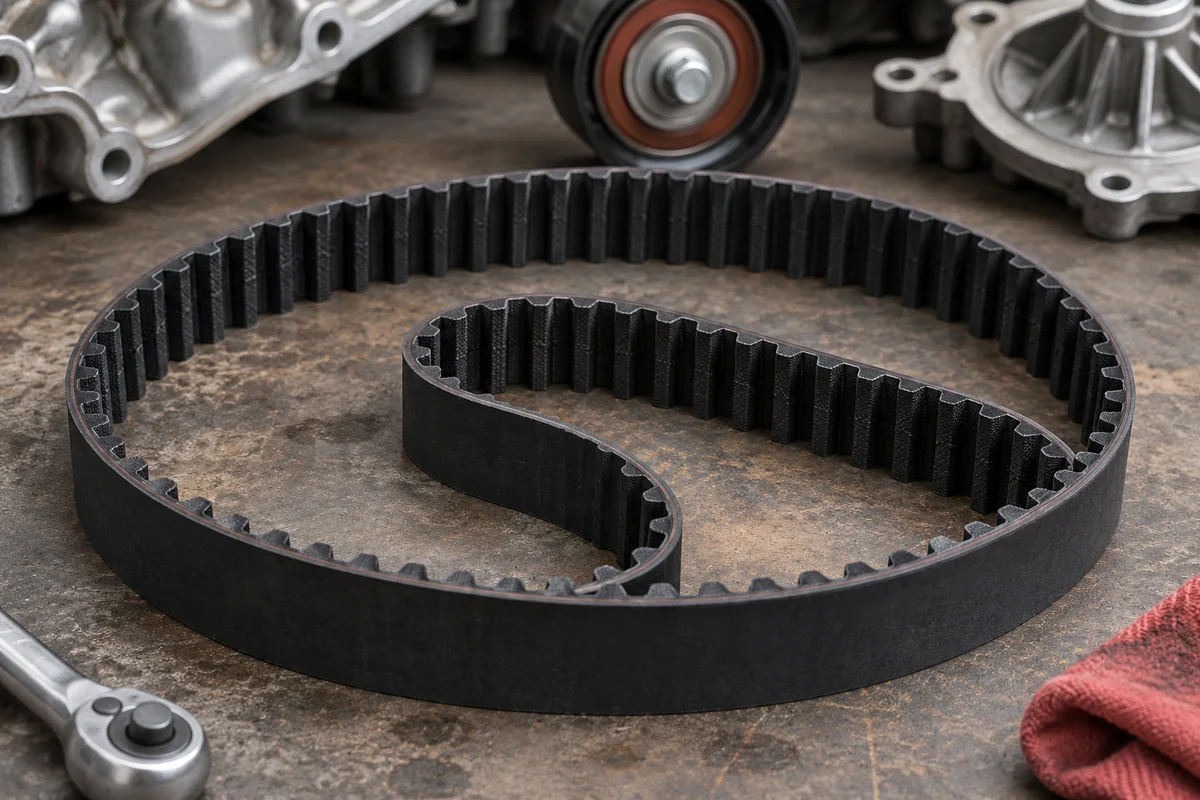
In one sentence
A timing belt is a toothed belt that keeps the crankshaft and camshaft in sync, so the valves open and close at the right time.
When is the belt due?
Look up the replacement interval for your exact engine and version. It may be based on mileage, age or both. If both limits apply and the first one reached counts, a low-mileage car can still be due.
A broken belt can cause serious damage in many engines. Some engines use a timing chain. Ask your garage which system yours uses if the handbook is unclear.
Start by identifying the exact engine. Look up its interval and compare it with the latest invoice. The model and year alone may be insufficient because a car model can have several engine options.
Check the invoice explicitly lists a timing belt replacement. An auxiliary or accessory belt is a different part. Ask the garage which belt was replaced if the wording is unclear.
Suppose your schedule says 120,000 km or six years, whichever comes first, and the belt was changed at 80,000 km. In this example the next mileage limit is 200,000 km. The date may come first. These numbers are illustrative.
Ask whether a quote covers the belt alone or also the rollers, labour and possibly the water pump. Ask which parts should be replaced together on your engine so you can compare quotes properly.
You buy a used car
Ask for the last replacement invoice. Its date and mileage help you work out the next due point. If the paperwork is missing, ask a garage to help.
Plan around the schedule for your engine. Do not wait for a noise or warning.
Checking the engine code and last replacement
Identify the timing system for your engine code. A model name can cover several engines over the years. The auxiliary drive belt is a different part. If a previous owner says the belt has been replaced, check which component is listed on the invoice.
Find the date and mileage of the most recent documented replacement. Use the manufacturer’s schedule for your engine and operating conditions to plan the next check.
Check that the registration and mileage on the job sheet match the car. If it only says the belt was inspected, look for an invoice documenting replacement. If there is still uncertainty, ask a workshop about the interval specified for the exact engine.
Comparing belt, roller and water pump quotes
A receipt says ‘belt replaced’ without a part number. Ask the workshop whether it refers to the timing system or the accessory drive. This helps you avoid basing the next replacement date on the wrong job.
A quote for the belt alone covers different work from a kit that includes tensioners, rollers and a water pump where applicable. Ask what is replaced together on your engine.
Ask whether the workshop can add the replacement to the digital service history. When you sell the car, both the record and the itemised invoice help show which work was carried out.
If the history is unknown, ask the workshop what evidence is useful and what an inspection can establish. Agree on the work and the total price including labour and parts.
Keeping the timing belt invoice
Keep an itemised invoice with the engine variant and the replaced parts.
When the belt is replaced, record whether the tensioners and rollers were renewed and whether the job included the water pump. Keep the date from the job sheet. These details will be more useful later than a note saying only that a belt was changed.
Read more about when to replace a timing belt.
Frequently asked questions
Does every car have a timing belt?
No. It depends on the engine. Some engines use a timing chain, for example.
Does low mileage let me postpone replacement?
Check whether the schedule also has an age limit. It can come before the mileage limit.

Keep track in Revler
Record the replacement date and mileage in your maintenance history.
See it in the appSources and further reading
General information. Your vehicle handbook takes precedence for maintenance instructions.