Electric car consumption: what does it mean?
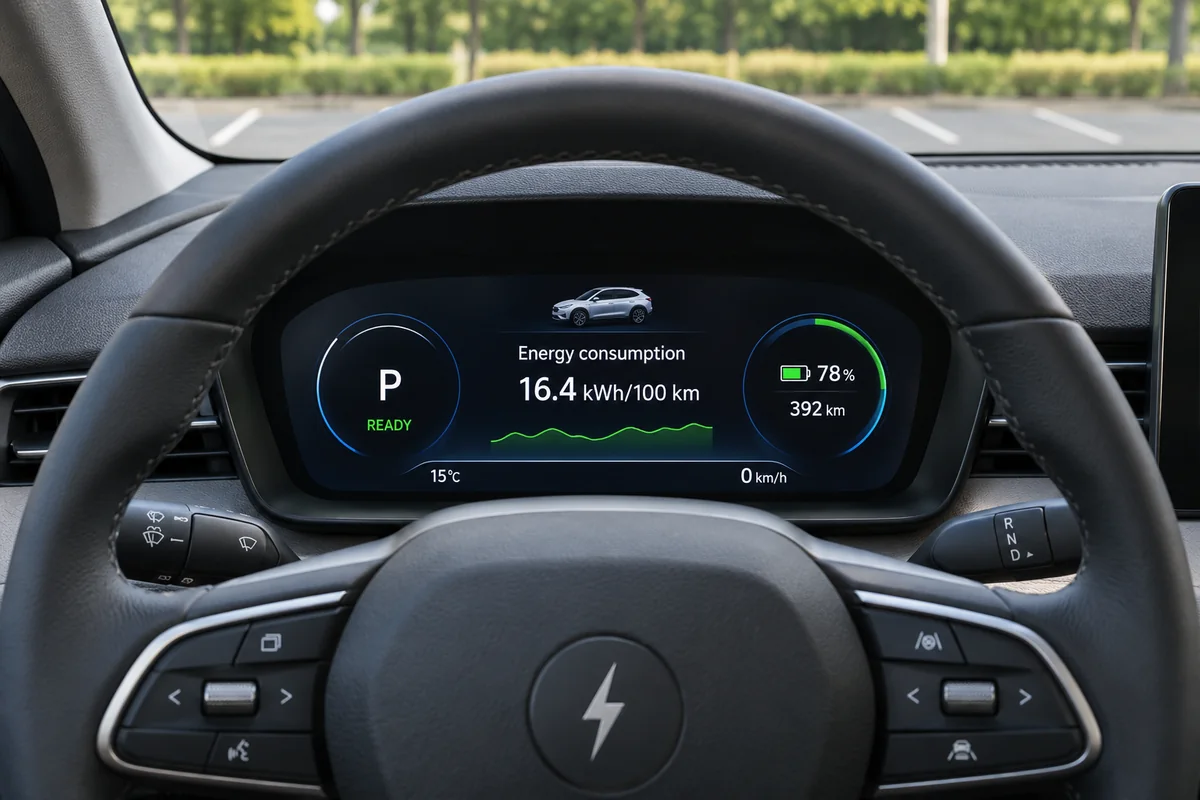
Your trip computer and charging invoice can show different figures. Use the one that suits the comparison.
In one sentence
Electric car consumption is the energy used to cover a distance. It is usually expressed in kilowatt-hours per 100 kilometres, or kWh/100 km.
What does kWh per 100 km tell you?
Divide energy used by distance and multiply by 100. A lower number means less energy per kilometre. Compare similar trips because speed, temperature, heating and load affect the result.
Check where the figure comes from. The trip computer and a charging invoice do not necessarily measure the same thing. The invoice records energy drawn and may reflect charging losses. Use invoices for cost and compare trip readings with trip readings.
A WLTP figure comes from a standardised test and helps compare similar versions. Use your own trip data to estimate consumption for your route.
36 kWh for 200 kilometres
The car shows 36 kWh for a 200 km trip. That is 36 ÷ 200 × 100 = 18 kWh/100 km. To calculate charging costs, use billed energy and charges from the invoice.
Compare consumption using the same unit and measurement method.
Dashboard readings and charger measurements
The dashboard and charging point measure in different places. The dashboard can report energy for driving and other functions according to the manufacturer’s definition. The charger records energy delivered through its meter. A calculation based on charging sessions also depends on whether the battery was at a similar level at the start and end.
Record whether a figure comes from the trip computer, charger or invoice. Include distance, temperature and trip type. Use the same measurement source when comparing periods.
Decide whether you want driving consumption or the amount of electricity purchased. For the drive, record the trip computer reading. For electricity bought, use the charging session record. A charge immediately after a trip does not necessarily belong entirely to that trip.
Comparing driving consumption and charging costs
A 200-kilometre drive uses 34 kWh according to the car, or 17 kWh per 100 kilometres. The next session shows 38 kWh. Interpreting the difference requires comparable battery levels before the trip and after charging, along with an understanding of what each meter counts.
Compare paid kilowatt-hours and tariffs for costs. To assess driving efficiency, compare dashboard readings from similar journeys. A lower number on one display need not contradict a higher number on another.
When comparing tariffs, check the charging power and how the provider bills. Some charges appear separately on the invoice. To compare journey costs, use the amount actually paid and the same distance travelled.
Keep rapid charging and home charging separate where useful. For a trip, use available energy and a consumption assumption that fits the conditions, leaving room for uncertainty along the way.
Recording energy, distance and cost separately
Record the measurement source, distance and period. For cost comparisons also keep the amount paid and any fixed session charges.
If you charge at home on a variable tariff, keep the actual amount paid per session. You can later divide the total by the distance covered in the same period. Record any reimbursement separately if you want to distinguish gross costs from what you paid yourself.
For a home charging session, check whether your electricity meter can distinguish the charger from other household use before attributing the whole increase to the car.
Frequently asked questions
Is a lower number more efficient?
With the same measurement method, fewer kWh per 100 kilometres means less energy is used per unit of distance.
How do I calculate the electricity cost?
Multiply billed kWh by the tariff and add any session charges.

Keep track in Revler
Keep trip distances and charging costs in your car log to review changes.
See it in the appSources and further reading
General information. Your vehicle handbook takes precedence for maintenance instructions.