Engine oil: what does it mean?
An oil label carries several markings. Your handbook tells you which ones matter for your engine.
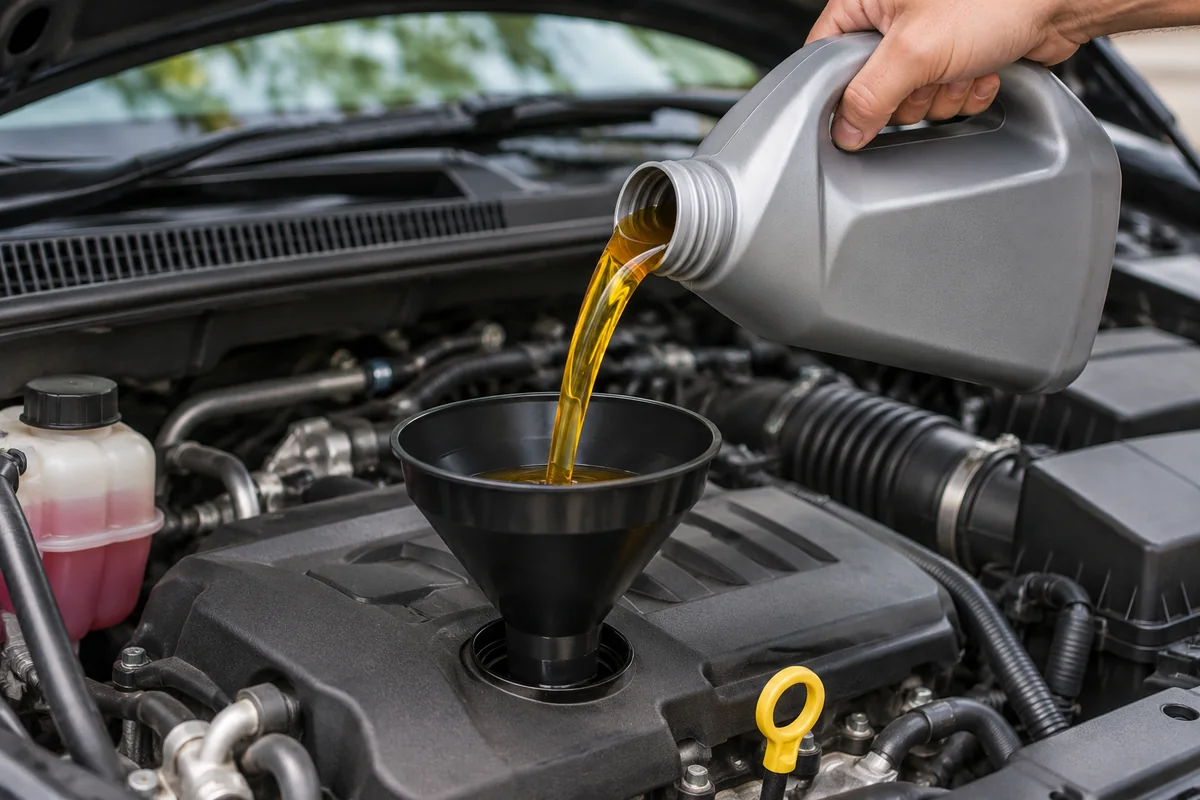
In one sentence
Engine oil lubricates moving parts, helps remove heat and protects against wear. The manufacturer specifies which oil is suitable for your engine.
Which engine oil do you need?
Start with the handbook and check the exact engine. Look up the viscosity, such as 5W30 or 0W20, and the required standard or manufacturer approval. Find that combination on the label or data sheet.
Viscosity describes how the oil behaves at low and higher temperatures. Two bottles with the same grade can have different approvals. Two engines in the same model can require different oil.
The amount depends on the engine and the job. Topping up to the specified level differs from a full change. Ask the garage to list the oil specification on the invoice.
Comparing two 5W30 bottles
Both bottles say 5W30. Only the second lists the approval required by your handbook. That approval is the information the large number on the front does not provide.
Check both viscosity and approval before buying or using oil.
From engine requirements to the data sheet
Engine oil forms a lubricating film between moving parts, helps carry heat away and holds contaminants in suspension so the system can manage them. The filter catches some particles. The oil is still exposed to operating stresses. Start with the engine’s requirements when choosing a product.
Write down the required viscosity and complete approval code. Check the data sheet for the exact variant. Several oils can be marketed under a similar name within one brand.
Look up the data sheet for the exact bottle you plan to order. Two products in the same range can have similar packaging. Check the line showing the variant and the manufacturer approval code and compare it with the requirements for the engine in your car.
Comparing oil products and approvals
Two oils from one brand list 5W-30, but their data sheets show different approvals. Compare the complete variant name and the code in the handbook before ordering, so you select the product intended for your application.
Compare both viscosity and the required API, ACEA or manufacturer code where applicable. A shared SAE grade describes only the viscosity classification.
When comparing products, note the date of the data sheet too. Packaging and formulations can change. Recheck the details of the current variant, even if the name is familiar from an earlier service.
Use the handbook’s measurement conditions and quantities when topping up. Follow the safety instructions for an oil pressure warning. If the level falls repeatedly, have the cause checked for possible leaks or consumption.
Recording top-ups and oil changes
Record the exact oil, quantity and whether it was a top-up or a change. Ask which filter was fitted during a service and when the next visit is due.
At the next service, ask whether the oil comes from a drum or a bottle and what name appears on the container. Record it alongside the approval. At a later visit a different workshop can use that information to identify the oil that was actually used.
For a diesel or petrol engine with a particulate filter, check the requirement for that exact engine. The presence of a filter alone does not identify an interchangeable oil category.
Frequently asked questions
Must I use the same brand as the workshop?
Start with the characteristics and approval required by the car manufacturer. A brand alone does not determine suitability.
Does dark oil mean I need to change it?
Colour alone tells you too little. Follow the interval and have unusual conditions assessed.
What should I look for in a review?
Find the precise product and engine used. One driver’s experience cannot establish the approval required for your vehicle.

Keep track in Revler
Record which oil was used and the mileage at the oil change.
See it in the appSources and further reading
General information. Your vehicle handbook takes precedence for maintenance instructions.